Weight-loss and fitness retreats have long been a staple of wellness travel: a week or two of structured nutrition, training and treatments, with results you could see on the scales. GLP-1 medications are changing that picture. As of May 2026, 21% of US households included a current GLP-1 user, up from 9% in January 2025, according to PwC analysis of Numerator data.
It is happening as the wellness economy hits new heights. The Global Wellness Institute’s Global Wellness Economy Monitor 2025 valued it at a record US$6.8 trillion in 2024, with wellness tourism among six sectors forecast to pass US$1 trillion by 2029. To understand what this means for weight-loss and fitness programmes, we spoke to the medical teams at Original Mayr Medical Resort, Tulåh, Lanserhof Lans, Chiva-Som Hua Hin and Layan Life.

At Original Mayr Medical Resort, which marks 50 years on the shores of Austria’s Lake Wörthersee in 2026 as the first permanent home of Mayr medicine and whose medical concept centres on gut health, digestive function, metabolic balance and prevention, Dr Ursula Muntean-Rock is welcoming a more varied intake. “Some guests come with a specific desire to lose weight, while others are already using GLP-1 medications or are considering them. Increasingly, they also want to understand their metabolism, digestion, nutrition and physical health.” Guests using GLP-1 medications often ask how to maintain muscle mass, consume sufficient protein and other nutrients, and eat appropriately when their appetite is reduced. “These are important considerations, as weight reduction should be nutritionally appropriate and support long-term health,” adds Muntean-Rock.
It is a subtle but significant change in the questions guests are bringing with them. Rather than viewing weight loss as an isolated goal, there is growing interest in understanding what might support the body throughout the process—particularly when appetite is lower and eating enough of the right nutrients can require more thought.
See also: Beauty Brokers’ Melinda Anna Farina On Wellness, Skincare & Why Consistency Beats Novelty

That broader perspective reflects the way clinical wellness itself has been developing. A retreat can offer something that is difficult to achieve through medication alone: time, structure and professional guidance around the everyday behaviours that influence how someone feels and functions.
At Tulåh, the 30-acre clinical wellness sanctuary that opened in the hills of northern Kerala in February 2026, pairing Ayurveda with advanced diagnostics, Chief of Medical Services Dr Ravi Parihar hears the same shift. “Their question is no longer simply, “How do I lose weight?” Instead, it is becoming, “How do I become healthier, preserve muscle, improve my energy levels and maintain the results over the long term?” he says.
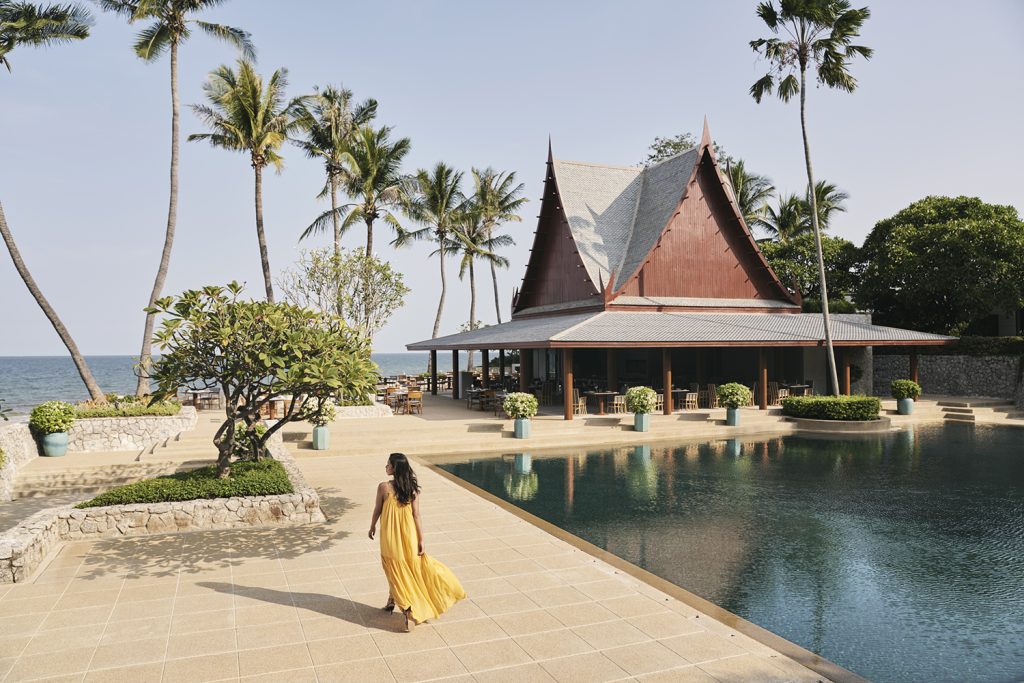
At Chiva-Som Hua Hin, which opened on Thailand’s Gulf coast in 1995 and is often described as Asia’s first luxury wellness resort, Research and Development Director Dr Jason Culp puts it simply: “In many ways, this represents a move from simply asking, ‘How much weight can I lose?’ to asking, ‘How healthy can I become?'” And that is where he sees the retreat’s role: “We do not prescribe GLP-1’s, but we believe wellness retreats have an important complementary role to play. The medication may help with weight loss, but what happens alongside that weight loss is equally important.”
For weight-loss programmes in particular, the brief is evolving. “Two years ago people came to us and asked us to help them lose weight. Now the medication already does that part. So the questions we get are different,” says Dr Sataporn Wangthitikul, MD Aesthetic and Longevity Medicine at Layan Life by Anantara in Phuket, a holistic health destination that blends ancient healing traditions with cutting‑edge medical science to support every stage of life—from stress reduction and fitness optimisation to longevity and preventative health.
“Two individuals with the same body weight or BMI can have very different levels of muscle mass, visceral fat, cardiovascular fitness and metabolic health, as well as different future disease risks,” says Dr Parihar.
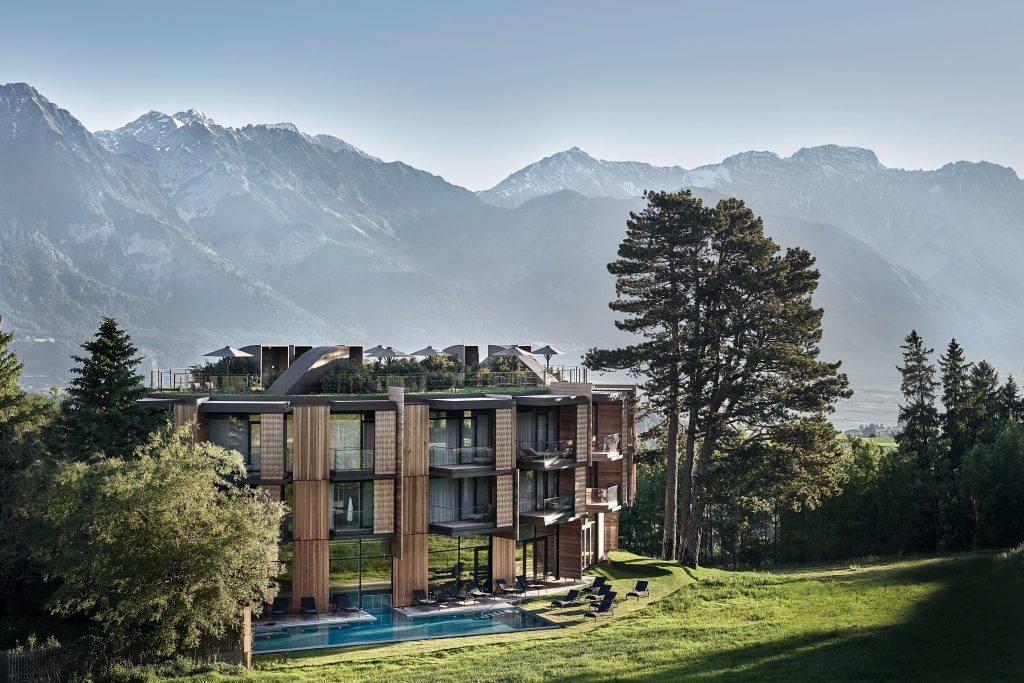
Dr Katharina Sandtner, Medical Director of Lanserhof Lans, the original Lanserhof founded in 1984 on a plateau above Innsbruck, agrees: “Most importantly, we should not automatically equate weight loss with improved health. What matters is what a person is losing.” A 2025 review found that up to 40% of the weight lost on GLP-1 receptor agonists can come from fat-free mass.
Whatever a guest’s stance on the medication, the approach across all five properties centres on protein and strength. “Protein first. We aim for at least 1.2 to 1.6 grams per kilogram of body weight per day, spread across every meal, in small portions that a suppressed appetite can actually manage,” says Dr Wangthitikul, in line with an October 2025 review recommending more than 1.2 g/kg of protein a day alongside resistance training. At Chiva-Som, “For someone taking a GLP-1, for example, we may place greater emphasis on protein requirements and nutrient intake, resistance training and preserving lean muscle, while taking into account their appetite and tolerance for food and exercise,” says Dr Culp.
See also: What Is Biohacking? Everything You Need To Know
The Austrian resorts add a digestive dimension. “Nutrition is not simply about restricting calories. We focus on digestive relief, food quality, individual tolerance, adequate protein and sufficient micronutrients. This is particularly important when appetite is reduced,” says Dr Muntean-Rock. Dr Sandtner adds: “However, from a medical perspective, it is not enough simply to tell a patient to eat more protein. We also need to consider whether the body is able to digest, absorb and utilise these nutrients effectively.” For context, PwC’s 2026 survey found 41% of current GLP-1 users have never done strength training, a potential opening for fitness-focused retreats.

Medical Guidance Comes First
The role of the retreat is also evolving in small but meaningful ways. For guests who are taking, considering or coming off GLP-1 medication, the medical teams see an opportunity to provide additional support around nutrition, exercise and longer-term lifestyle habits.
“GLP-1 medications have fundamentally changed the treatment of overweight and obesity. From a medical perspective, however, I see this development as both a blessing and a challenge,” says Dr Sandtner. “They can be a valuable medical tool when appropriately indicated and prescribed by a medical professional. However, they do not replace the need to consider digestion, nutrition, muscle mass, physical activity, sleep, stress and long-term behaviour,” says Dr Muntean-Rock. Dr Parihar agrees: “For us, GLP-1 medications do not replace lifestyle medicine; they make it even more important.”
Guests are asking sharper questions too. “The most common question I hear now is honest and quite sophisticated: “Will this drug make me live longer, or just make me thinner?”” says Dr Wangthitikul. Dr Sandtner adds a note of perspective: “However, I believe there is an important distinction to make: more diagnostics do not automatically mean better medicine.”
The result is a more varied medical conversation. Some guests may be considering whether medication is appropriate for them; others may already be taking it and want support with nutrition and exercise; while another group may be thinking about what happens if they decide to stop.
For retreats with medical teams on site, this creates an opportunity to meet guests at different points in that journey. The emphasis, however, remains on individual circumstances rather than treating medication as a universal solution or a universal problem.
“We also see a second group that is growing quickly: people who lost weight on a GLP-1 and then regained it, and people who stopped because of side effects. They are not looking for another diet. They are looking for a proper medical plan,” says Dr Wangthitikul.
Retreats are adapting, whether guests are starting, continuing or stopping the medication. “We will offer a new module for guests who are considering starting a GLP-1 medication, are already using one and would like medical support during the process, or are looking for a medically guided strategy for discontinuing it,” says Dr Muntean-Rock. At Chiva-Som, “We also want to help our guests develop the dietary and lifestyle habits that allow them to maintain their results if they eventually come off the medication,” says Dr Culp.
See also: Dr. Dawn Mussallem & Fountain Life: Pioneering Precision Longevity In Partnership With The Estate

What’s Next for Weight-Loss and Fitness Retreats
“If pharmacological therapies become increasingly effective at producing weight loss, a wellness destination cannot define its value simply by how many kilograms a guest loses during a stay,” says Dr Parihar. The industry is already adapting: in July 2026, Forbes Travel Guide reported on hotels and retreats building GLP-1 programmes around strength training, muscle preservation and biomarker testing.
“Medication can be a useful tool, but it does not teach someone how to eat well, preserve muscle, exercise, sleep properly or create a sustainable lifestyle,” says Dr Culp.
For Dr Muntean-Rock, it was never either/or: “The future is therefore not ‘GLP-1 medications versus lifestyle’. Medication may be one element of a broader medical strategy, while intestinal health, prevention and long-term wellbeing remain central to our approach.” Dr Sandtner reminds us of what can’t be measured: “Perhaps, in an increasingly technological world of medicine, the deeply human aspects of health will become some of the most important of all.”
What to Look for When Booking
- Body composition, not just weight: muscle, fat and function measured at the start and end of your stay.
- Protein-led menus and guided strength training that suit a reduced appetite.
- A doctor on hand to review your medication, side effects and bloodwork.
- A plan for home, including support if and when you stop the medication.
Disclaimer: This article is for general information only and does not constitute medical advice. Always consult a doctor or qualified healthcare professional before starting, changing or stopping any medication, including GLP-1s, or beginning a new nutrition or exercise programme.
Contact bookings@compareretreats.com to book your luxury wellness retreat